Priessnitz wrap step by step: When does it help and how to avoid common mistakes
In an era full of antibiotics and painkillers, we often forget about the tried and tested methods of our grandmothers. However, the Priessnitz wrap is one of the most effective natural treatments, which Vincenz Priessnitz gave to the world back in the 19th century. Whether you suffer from a sore throat, a dry cough or sore knees, this cold steaming compress can work wonders - if you apply it correctly, of course.
In this article, you will learn not only how the wrap works, but also how to save yourself the trouble of working with wet towels with modern wraps.
What is the Priessnitz wrap and how does it work?
Many people mistakenly believe that it is just "cooling". However, the magic of the Priessnitz wrap lies in the specific blood circulation process, which takes place in three phases. If you remove the wrap too soon, you will lose the most important healing effect.
- Cold phase (approx. 5–10 minutes): After applying a cold compress, the blood vessels contract and the temperature in the area drops. This helps with fever and acute swelling.
- Isothermal phase (approx. 30–40 minutes): The temperature equalizes and the blood vessels begin to dilate.
- Hyperemic phase (overheating): This is the key moment. The area begins to heat up intensively, which starts the immune processes, accelerates healing and relieves muscle tension.
What does the Priessnitz wrap help with?
This universal helper should not be missing in any home medicine cabinet. It is most often used for the following problems:
- Respiratory tract diseases: Angina, laryngitis, pharyngitis, hoarseness and sore throat.
- Cough: Mainly for dry, irritating coughs, but it also helps with bronchitis.
- Fever: Used to gently reduce temperature (here the wrap is changed more often).
- Musculoskeletal system: Rheumatism, joint pain, strained muscles or sprained ankles (after acute swelling has subsided).
Instructions: How to make a wrap correctly (Classic vs. Modern)
In order for the wrap to work, you must strictly follow the rule of three layers.
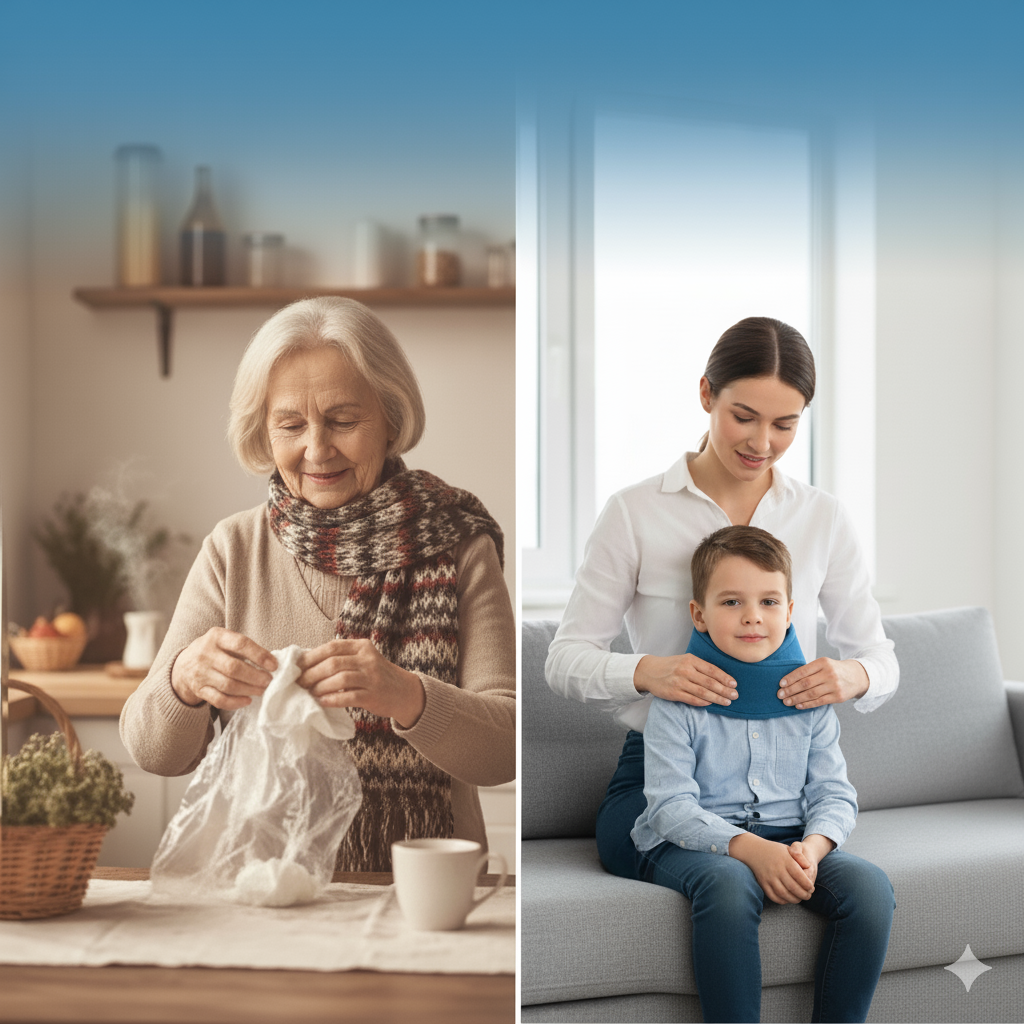
Option A: Classic "grandmother's" method
It is laborious and often uncomfortable, but functional.
- Wet layer: Soak a cotton handkerchief in cold water and wring it out. Apply it tightly to the skin.
- Impermeable layer: Cover with a plastic bag (it must extend beyond the wet layer so that clothes do not get wet).
- Dry layer: Wrap with a warm scarf, woolen scarf or towel.
Option B: Modern Priessnitz Wrap (Recommended)
Why bother with falling plastic wrap and wet pajamas? Our modern wraps [Link to your e-shop] have all layers integrated in one convenient product with Velcro.
- You wet the inner removable insert.
- You insert it into the wrap belt (which has an impermeable and insulating layer).
- You simply fasten it with Velcro.
- Advantage: The wrap stays in place, does not strangle and the child cannot tear it off.
How long should you leave the wrap on?
This is where most mistakes are made. The duration of action depends on what you are treating: (in adults)
- For the treatment of inflammation and fever (throat, joints, cough): Leave on for 1 hour to allow all three treatment phases to take place. Then remove the wrap and take a break of at least 0.30 hours.
- To reduce fever: This is only the first (cold) phase. Apply the wrap to the chest or calves for only 15-20 minutes until the material warms up. Then repeat the process.
When not to use the wrap?
Although the method is natural, there are situations when it is not suitable:
- For infected, festering wounds.
- For skin diseases (eczema) that would worsen with moisture.
- For very young children and cardiac patients, it is always better to consult a doctor.
- If you feel cold or have chills - the body must warm up first.
Are you suffering from a sore throat or are you looking for relief for your joints? Check out our offer of [Traditional wraps for the whole family] and experience the power of water for yourself.
-1.png)